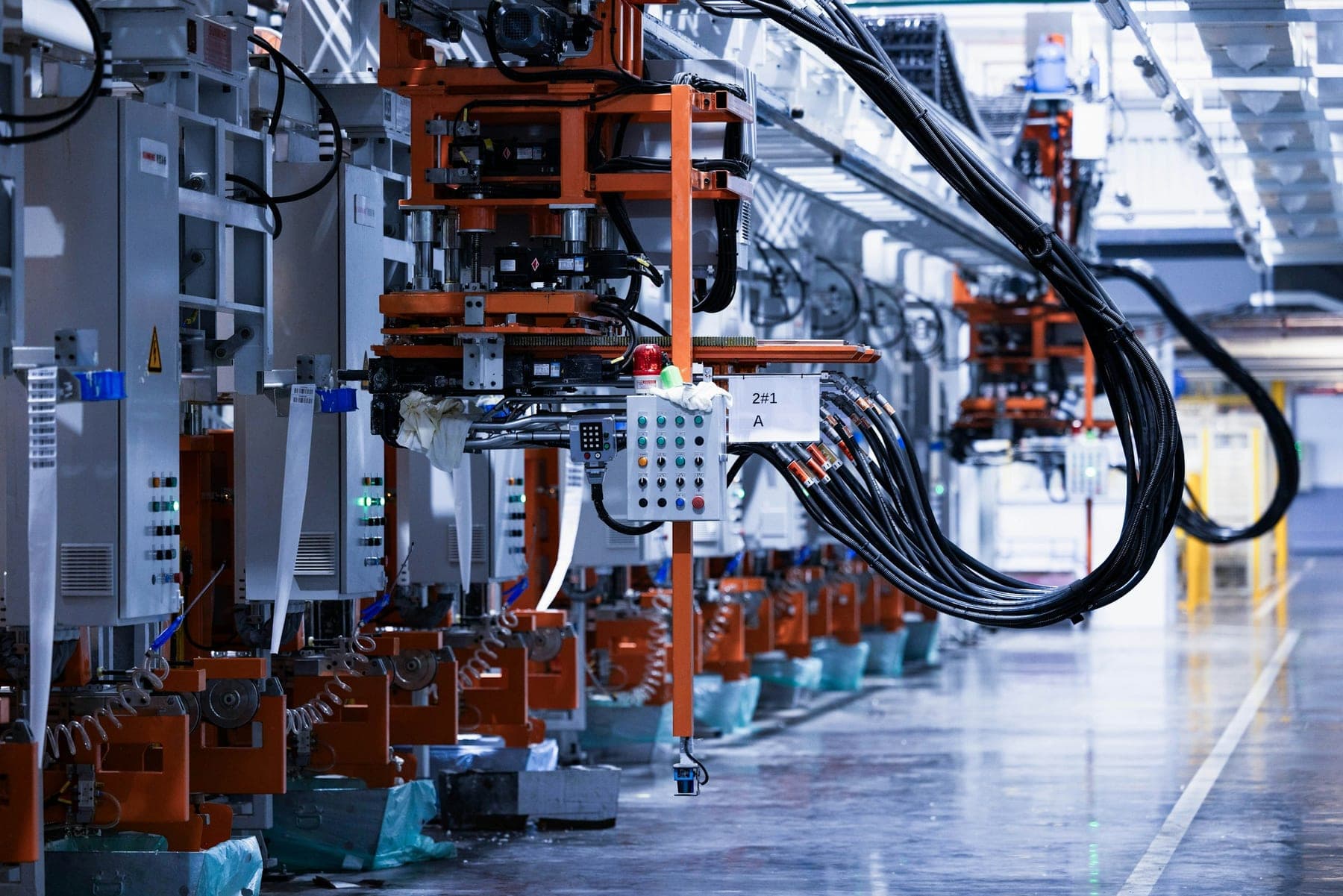
Advanced Manufacturing & Process Industries
In manufacturing and process facilities the building is not the project. The process is the project — a tool install, a production line, a process unit — and the building exists to serve dates and conditions fixed before design began.
Project types
Semiconductor fabs
Cleanrooms
Battery plants
Critical minerals and battery-materials processing
Pharmaceutical and biomanufacturing facilities
Chemical and process plants
Food processing plants
Heavy and light manufacturing plants
Aerospace and defense manufacturing
Robotics and automation campuses
Ultra-pure water
Specialty gases and chemical systems
Process exhaust
Vibration control
Redundant utilities
Tool installation and process commissioning
Where projects fail in this sector
These failure modes recur across programs in this sector. None of them are construction problems.
Building shell scheduled independently of tool install
The shell finishes to its own logic, and the tool or line install date — the only date that matters commercially — absorbs every accumulated delay.
Process utilities scoped after building design is fixed
Ultra-pure water, specialty gases, process steam, and exhaust are routed into a building that was never dimensioned for them.
Owner-furnished equipment not integrated into the schedule
OFE sits outside the contractor's schedule, outside the contractor's risk, and squarely inside the owner's.
Validation and qualification treated as a closeout activity
In a cGMP or process-critical facility, installation, operational, and performance qualification (IQ/OQ/PQ) is a documented program running in parallel with construction — not a phase at the end.
Redundancy requirements defined too late to be economical
Redundancy decided after the utility design is set is bought at the worst possible price.
Process hazard analysis completed after the design it should have shaped
Where process safety management applies, hazard analysis findings move equipment spacing, relief and containment, and hazardous-area classification. Run late, they reopen a layout already priced and permitted.
Sanitary design decided after the layout is fixed
In food processing, washdown, floor drainage and slope, hygienic zoning, and cleanable finishes are layout decisions. Settled afterward, they are retrofitted into slabs and walls never built for them.
Tie-ins to an operating plant planned without the shutdown calendar
Work inside a running plant connects to live utilities and process lines only during planned shutdowns. Those windows are few, production sets them, and missing one moves the program.
How we engage
The platforms most commonly used in this sector.
Readiness & Execution Assessment
Testing whether the building program, the process scope, and the tool install date are actually one plan.
Program Management & Owner Representation
Holding the interface between the base build, the process scope, and the owner's equipment.
Capital Strategy & Investment Assurance
Budget and schedule diligence where process scope dominates the capital plan.
Common questions — Advanced Manufacturing & Process Industries
Which facilities does this sector cover?
Why is the building schedule subordinate to the tool install?
What sets a vibration criterion, and why does it cost so much?
How should owner-furnished equipment be handled on a fab or plant project?
When should process utilities be scoped?
Is validation and commissioning really a program rather than a phase?
When should process hazard analysis and validation planning start?
What changes when the project is inside an operating plant?
Insights — Advanced Manufacturing & Process Industries
Owner-side perspectives on the constraints that govern delivery in this sector.
Process performance is bought in the specification, not at startup
In a manufacturing or process plant, the owner is buying an output, not a building. That output is defined, tested, and enforced through documents settled months before anything is installed.
Vibration criteria are set by the tool and paid for in the structure
A vibration limit is a process requirement expressed as a structural one. It is agreed by people who will not pay for it, and it is the hardest thing on the project to change later.
The building exists to serve the tool install
In advanced manufacturing, the shell has no independent value. Every date that matters is set by when process equipment can be placed, connected, and qualified.