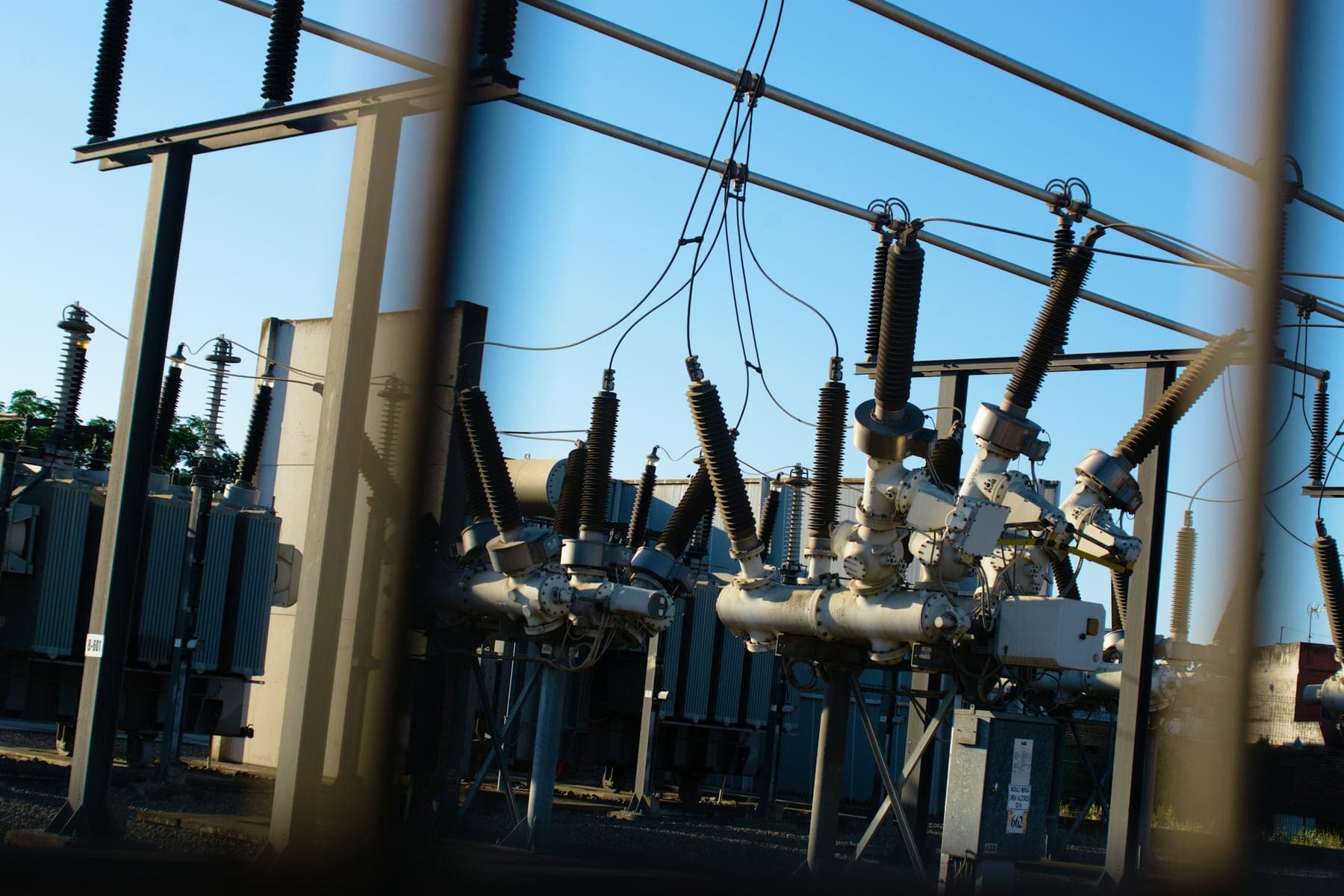
Energy & Power Infrastructure
Power projects are governed by queues, outages, and equipment lead times — three constraints an owner can plan around but cannot compress.
Project types
Substations and switchyards
Transmission and distribution
Utility interconnection
Microgrids
Battery and long-duration storage
Solar and wind
Natural gas and distributed generation
Cogeneration
Nuclear restarts and life extension
Small modular reactor site works and grid tie-ins
Grid controls and protection
Storm hardening and undergrounding
Power system commissioning
Where projects fail in this sector
These failure modes recur across programs in this sector. None of them are construction problems.
Interconnection queue timelines treated as schedule inputs rather than constraints
A queue position is a constraint the project must be built around. Treated as an input, it silently absorbs every other float in the program.
Long-lead transformer and breaker procurement misaligned with construction
Equipment that arrives after the pad is ready is a cost problem. Equipment ordered against a schedule that later moves is a much larger one.
Brownfield integration underestimated
Tying into an energized facility is an outage-planning problem, a protection problem, and an operations problem before it is a construction problem.
Controls and protection commissioning compressed at the end
The most technically demanding scope on the project routinely ends up with the least remaining schedule.
Permitting sequence not driving design
Where the permitting pathway is not allowed to shape the design sequence, the design gets done twice.
How we engage
The platforms most commonly used in this sector.
Readiness & Execution Assessment
Testing queue position, outage strategy, and the long-lead order book against the published schedule.
Program Management & Owner Representation
Coordinating utility, agency, contractor, and commissioning interfaces on the owner's behalf.
Project Recovery & Special Situations
Where commissioning has compressed and the in-service date is no longer credible.
Common questions — Energy & Power Infrastructure
Can an interconnection queue position be accelerated?
Is on-site generation a way around a long interconnection wait?
What does a non-firm or flexible connection offer actually commit the project to?
Why does commissioning so often compress on power projects?
How is brownfield integration usually underestimated?
Insights — Energy & Power Infrastructure
Owner-side perspectives on the constraints that govern delivery in this sector.
Curtailment terms are a design input
A faster connection offered on interruptible terms is a commercial trade with an engineering consequence. The design has to be able to survive the interruption it agreed to.
Utility capacity goes to whoever is ready first
Available capacity is not held for the project with the best case. It is taken by the project that can execute the agreement, post the security, and accept the terms on the day.
Queue position is a constraint, not a schedule input
An interconnection queue does not respond to urgency, capital, or escalation. Treated as an input, it silently absorbs every other float in the program.