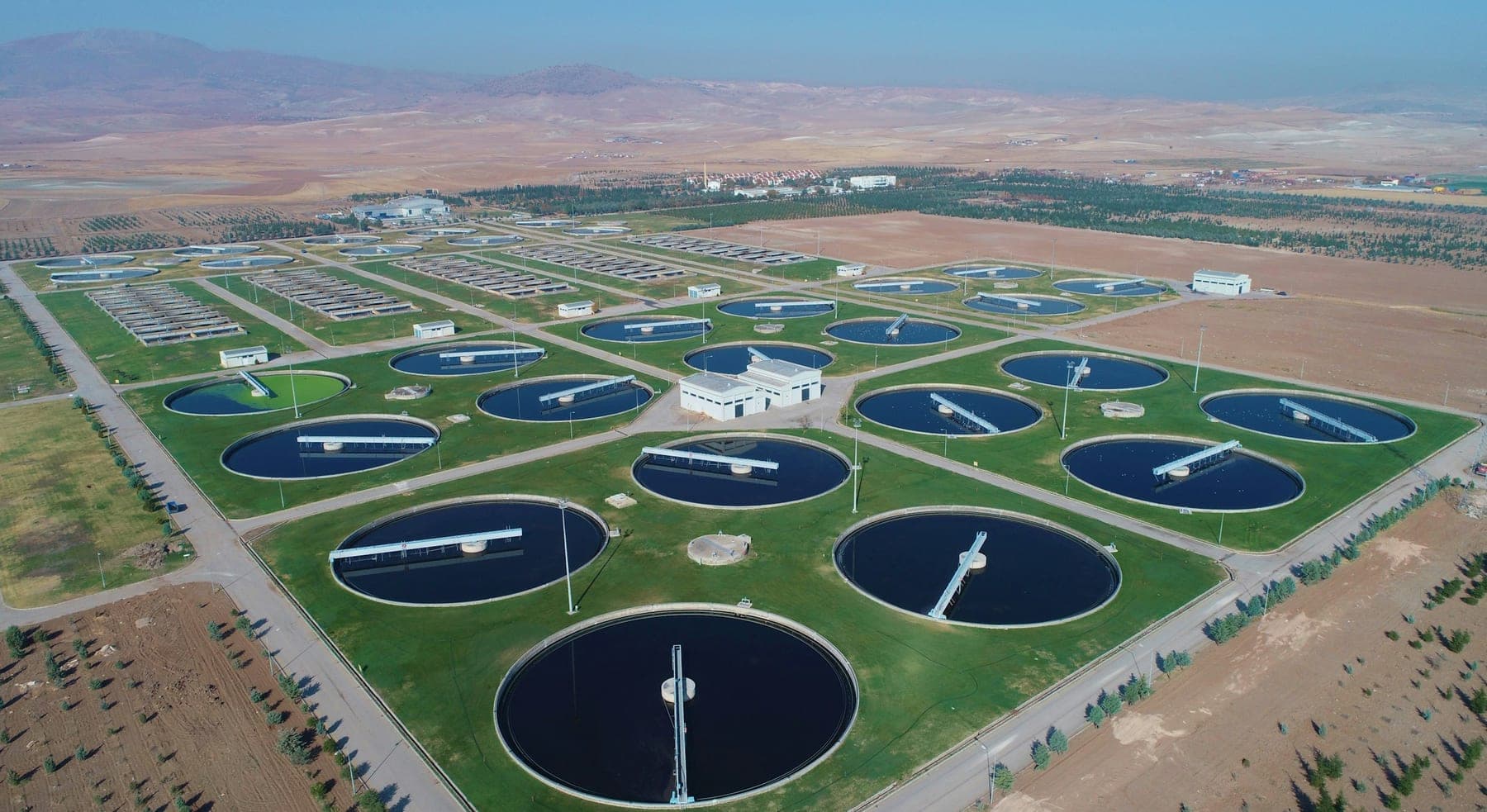
A discharge consent fails later than a supply agreement
Water diligence concentrates on getting water in. The permission to send it back is a longer process, is decided by a different body, and is discovered last.
Water diligence on an industrial or digital infrastructure project almost always begins with supply. How much water is available, from whom, at what commitment, and by when. That is a sensible question and it is usually asked competently.
The second question receives far less attention and carries more risk. Where does the water go afterwards, at what quality, in what volume, and who has to agree.
Why the two are not symmetrical
Supply is a commercial arrangement with a utility. It involves capacity, infrastructure, and price, and the counterparty has an interest in selling water. Where capacity is short the answer may be no, but it arrives reasonably quickly and it is a negotiation between two parties with aligned incentives.
Discharge is a regulatory determination about the condition of a receiving environment. The counterparty is an authority with a statutory duty to protect that environment, no commercial interest in the project, and an assessment framework that considers the cumulative effect of every other discharger on the same water body.
That asymmetry produces four differences that matter to a program.
The clock is longer. A discharge determination typically requires characterization of the effluent, modeling of its effect on the receiving water, and a consultation period. None of those can be compressed by commercial pressure.
The answer is conditional, not binary. Discharge consents arrive with limits — on volume, temperature, concentration of specified constituents, and sometimes on timing. A consent granted at limits tighter than the design assumed is a design change, and it lands late.
The assessment depends on other people. Where a receiving water body is already at or near its assimilative capacity, a new discharge competes with existing ones. The project's own merits do not determine the outcome.
It cannot be applied for early. The application requires a characterized effluent, which requires a defined process, which requires the equipment selection. Discharge is therefore structurally one of the last consents that can be filed and one of the first that constrains the design.
Supply tells you whether the project can operate. Discharge tells you whether the process you designed is permissible, and it tells you after the process has been designed.
Where the design gets caught
The consequence is a specific and recurring pattern. A process train is selected on the basis of capital cost and operating efficiency. The effluent that train produces is characterized. The discharge application is filed. The consent comes back with a limit the effluent does not meet.
At that point the options are all expensive. Additional treatment can be added, which is unbudgeted capital and unbudgeted operating cost, and it takes plot area the layout may not have. The process can be changed, which is a redesign at a late stage. Discharge volume can be reduced by increasing recovery, which usually means more energy and more concentrate to dispose of. Or an alternative disposal route can be found, which is a new consent on a new clock.
Each of those is recoverable. None is cheap, and all of them arrive at the point in the program where there is least room.
Running discharge as its own track
The fix is organizational rather than technical.
Discharge should be a named diligence item from the same week that supply is, with its own owner on the owner's side. That person's first task is to establish the receiving option — sewer, surface water, ground, or reuse — and to obtain an indicative view of the limits each would carry. Indicative limits are available far earlier than a formal determination, and they are enough to constrain the process selection while it is still cheap to constrain.
The process selection should then be tested against those limits before the equipment is specified, not after. A train that meets the limits with margin is worth paying for; a train that meets them exactly is a train with no tolerance for a variation in the consent.
Where a site is being acquired, the receiving position belongs in the acquisition diligence alongside power and land. A site with abundant supply and no viable discharge route is a site with a water problem, and the problem is not visible in the supply answer.
The question to ask early
One question surfaces most of this: if the consent came back at half the volume and materially tighter limits, what would we do.
If the answer is a specific and affordable plan, the risk is held. If the answer is that the project would need to redesign its process, the project is carrying an unquantified regulatory exposure on a path it has not yet started.